
The Compost Debate Is Missing the Point
Why soil health is about activation, not just addition.

Over the past few days I’ve seen a fascinating response to my recent video where I described compost as a precision tool - a thought that matured following a previous article on my Substack.
But back to the video; some people heard that as “anti-compost” whilst others assumed I was dismissing soil biology altogether.
Neither is true.
So I want to slow this down and add some nuance - not to win an argument, but to bring the conversation back to what actually helps gardeners grow food more simply and confidently.
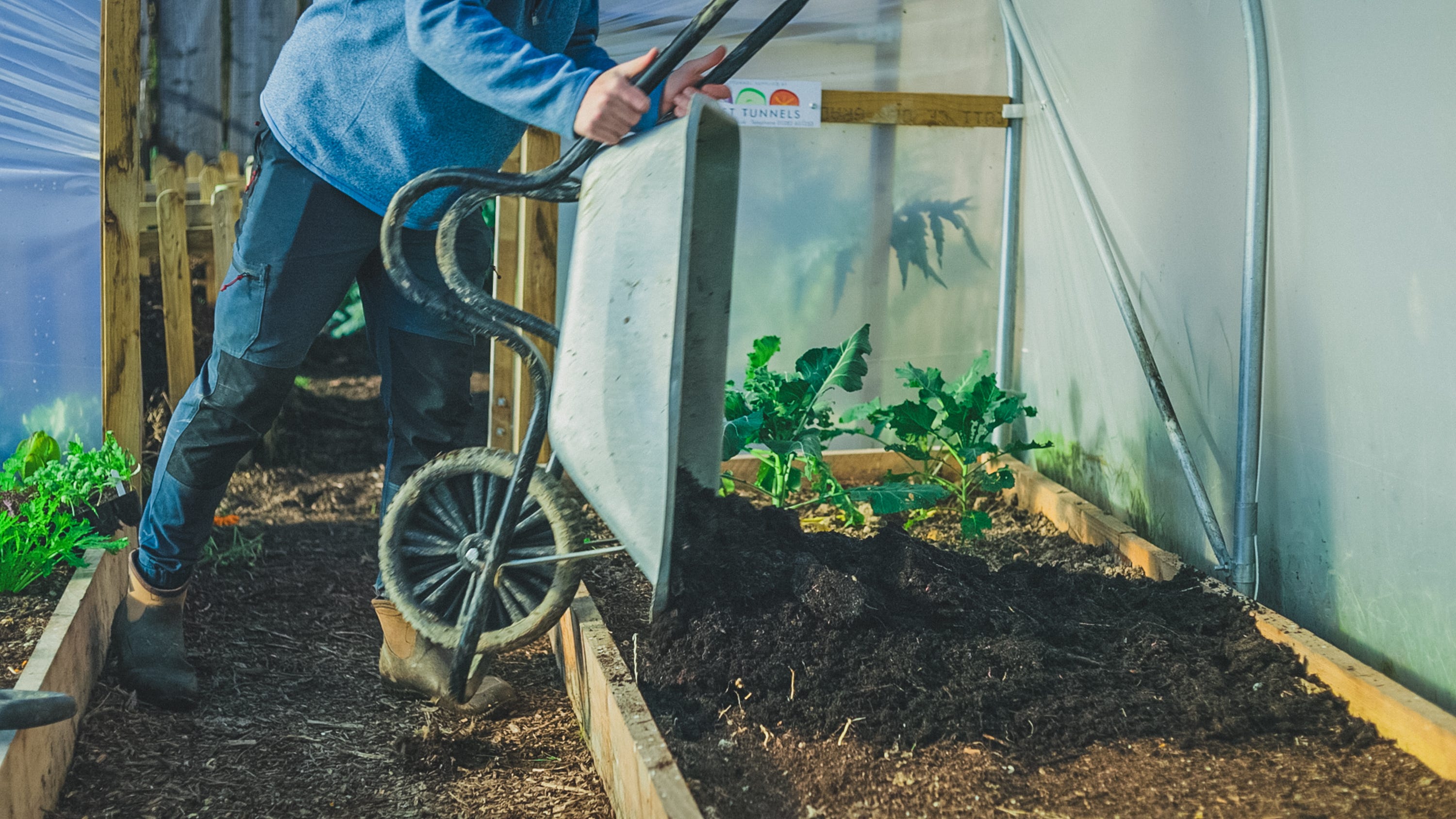
One thing I’ve noticed is that simply adding a layer of finished compost doesn’t always activate the full soil food web in the way people expect. You can walk past plenty of no dig beds that look immaculate on the surface but feel strangely quiet when you actually pull the compost back: few worms, little visible insect life, not much movement.
That’s not a criticism of the method itself, but a reminder that finished compost is already heavily decomposed. It doesn’t always provide the layered habitat, fresh material, or physical structure that draw larger soil organisms into action. By contrast, fresh organic mulches; leaves, stems, ramial wood, mixed plant matter etc often trigger a visible explosion of life because they invite the whole system to participate, not just the microbial phase.
Healthy soil isn’t just about what we add; it’s about what we activate.
If the compost added to a bed supports the microbial populations already present in that compost, I ask how much is it improving soil health overall?
This is how I see it:
Finished compost is a bit like adding glowing embers to a fire pit. They’re stable, they give steady heat, and they contribute to the system.
But what really activates a fire, what brings flames and visible energy - is the mix of feedstock at different sizes, that go on to cover different stages of burning, and then to feed that fire and keep the ‘heart’ pumping you bring in more raw material as the older material turns into embers.
Soil biology works similarly. Compost contributes bacteria, stable carbon and structure. But fresh organic layers create the energy gradients that wake the wider system up.
In summary: compost/organic matter is like the embers of a fire, whilst mulch layers and fresh organic material is like the wood/fuel. And healthy soil needs both - stability and activation.

The Context Matters
When I talk about compost in videos, I’m usually referring to typical homemade garden compost - often around a year old, visibly broken down where the raw ingredients are no longer identifiable, and used in beds or containers.
In practical gardening terms, that material often behaves like an immediate nutrient input. Not theoretically. Not academically. Practically.
You see it all the time:
A struggling plant is potted into fresh compost and suddenly responds.
A tired container is topped up and growth picks up again.
You pot on a seedling into the next size pot and away it goes.
That response isn’t magic. It’s simply the availability of nutrients combined with microbial activity.
But here’s where the misunderstanding creeps in:
acknowledging that compost is a soil amendment that offers immediate nutrient benefit does not mean compost has no biology, or that microbes aren’t important. Of course they are, and they are what make the nutrients plant available!
The real question is not whether compost works.
It’s how we frame its role in the wider system.
Compost vs. The Living Soil System
If you look at how nature builds soil, it rarely involves importing large amounts of finished compost and spreading it everywhere.
Instead, you see:
Layers of organic matter
Leaves and stems breaking down in situ
Earthworms dragging material into the soil
A visible explosion of life at the surface
Mulch drives a different process. It invites the whole soil food web - worms, beetles, fungi, microbes - to build structure gradually from the top down.
That’s the distinction I was trying to highlight. And the beauty of it is that it is very much observable; when I layered my beds with mulch last autumn (which has since almost completely broken down so no slug issues to come), and within days there were dozens of visible critters going about their work in every handful of mulch.
Compost is incredibly useful.
But using compost alone isn’t the same as activating a living system.
And for many gardeners, especially beginners, the idea that they need endless quantities of compost creates unnecessary stress - what I call compost anxiety.
Why I Call Compost a Precision Tool
The phrase “precision tool” isn’t meant to diminish compost. If anything, it elevates it.
A precision tool is something you use intentionally, at the right moment, for a specific outcome:
Starting seeds
Reviving containers
Supporting hungry crops
Improving poor substrates
What it isn’t - at least in my philosophy - is a blanket solution for every bed, every year, regardless of context.
Because soil health is not a single input. It’s a relationship between structure, biology, organic matter, water and time.
The Soil Food Web Isn’t Just Bacteria
Another part of this conversation is the tendency to reduce soil life to microbes alone.
To say this frustrates me would be putting it politely, and it is often the kind of comments that follow these kinds of videos. So defensive, so focused on the detail that they completely miss the picture.
Yes, bacteria and fungi matter enormously. But so do:
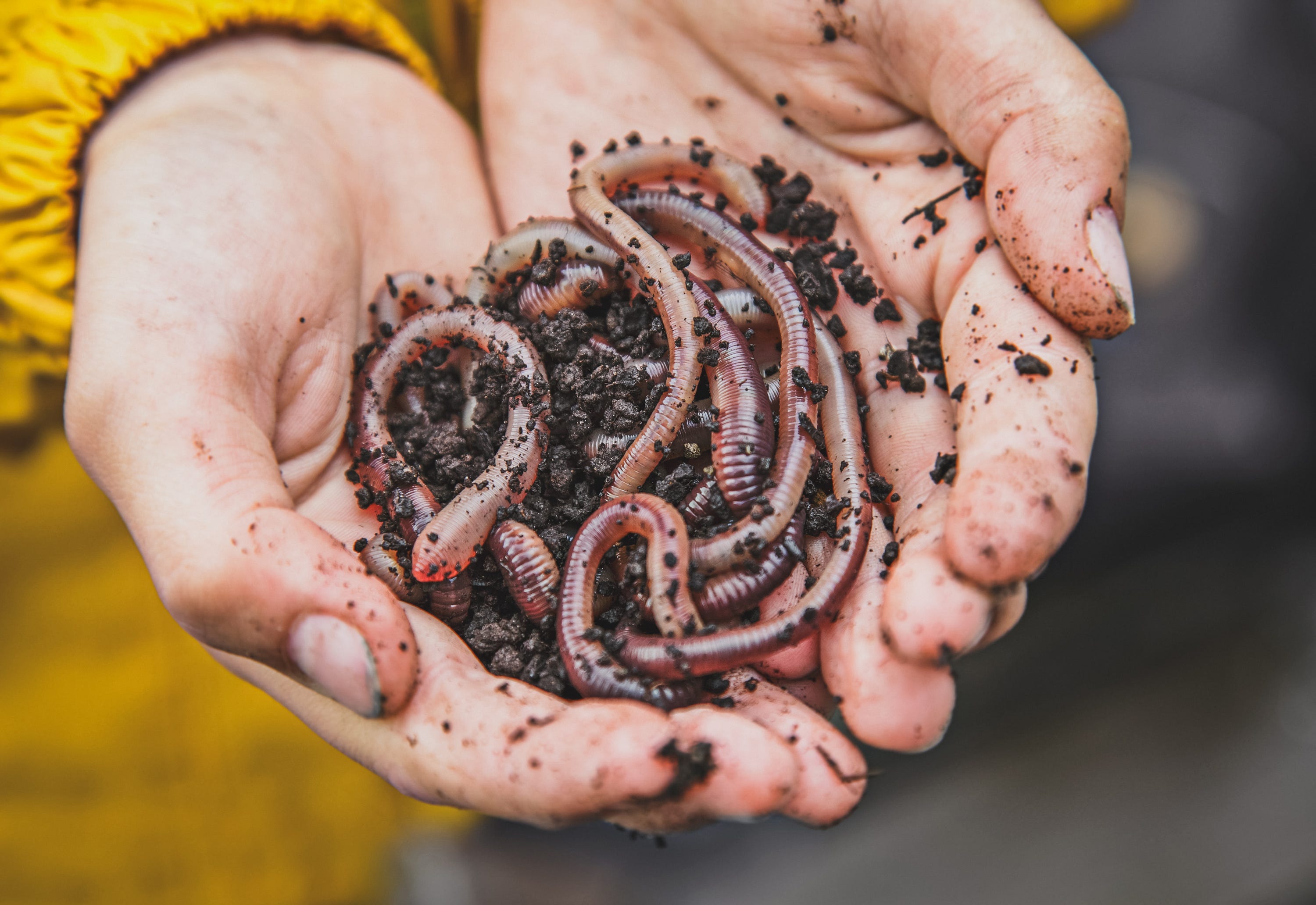
Earthworms, which physically reshape soil and leave fertility bombs around the place for plant roots to exploit (worm castings)
Insects and detritivores, which shred organic material
The layers of mulch that create a complex habitat
If we focus only on the microscopic, we risk overlooking the visible ecosystem doing the heavy lifting right in front of us.
Sometimes these conversations feel like standing in front of a majestic oak while someone insists on analysing a leaf under a microscope. The detail is fascinating - and valuable - but if we never step back, we miss the living system towering above us.
A bed covered in organic layers buzzing with worms tells me more about long-term soil health than any theoretical argument about whether compost feeds microbes or plants first.
Sometimes the most regenerative act isn’t adding more compost - it’s simply adding a layer of organic matter and stepping back and letting the system build itself.
This Isn’t About Sides
I’m not interested in creating a new dogma to replace the old one.
No dig, composting, mulching, regenerative practices - they all have huge value. But principles matter more than techniques.
My goal is always the same:
To help gardeners realise that growing food becomes easier when we stop chasing perfection and start understanding function.
Compost is a brilliant tool.
But it is still just a tool.
This isn’t about saying one method is right and another is wrong. It’s about recognising that different materials trigger different biological responses - and designing with that awareness instead of relying on a single input to do everything.
Because when you step back and watch how healthy soil actually forms, you realise your job as the gardener isn’t to micromanage the biology.
It’s to create the conditions.
In the campfire analogy, your job isn’t to control the chemistry of combustion - it’s to add the right materials, in the right proportions, at the right time.
Feed the fire, and let the system do what it was designed to do.
Healthy soil isn’t built by embers alone.
It’s built by understanding when to add fuel, and when to step back.
Thank you for your time,
Huw
PS - The best way you can support the work I do is to preorder a copy of How to Grow Food which comes out on the 12th of March. It would make a perfect gift for Mother’s day too - full of growing tips and delicious homegrown recipes to try!
Thanks Huw 😊 After reading your post about the role of compost and watching your video, we decided to use readily available leaves to mulch the beds on our allotment in the autumn instead of using up our limited supply of home made compost. So far so good 😊👍🏻 They are steadily breaking down.
Our plan is to use our compost as the precious resource it is and put it where we need it when planting out our veg.
Thanks again for your clear videos and posts.
The fire is a great analogy and illustrates the points you are making perfectly. Following your recent compost posts I too mulched some beds this autumn with a mix of wood shredding and leaves and general plant detritus. I look at them now early spring and they are all well populated with worms and life. Feeling positive going into the growing season.